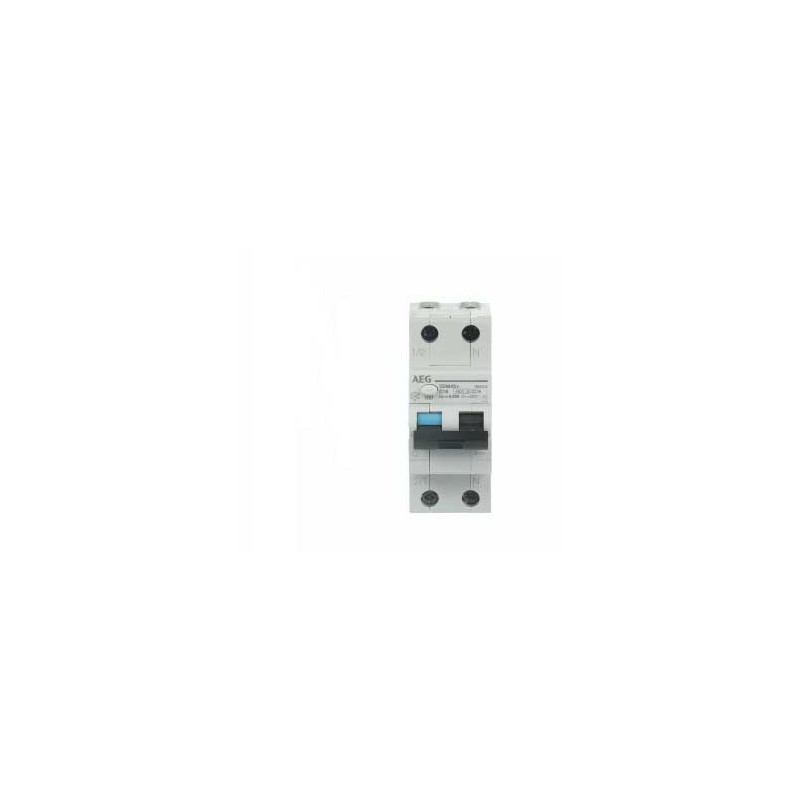
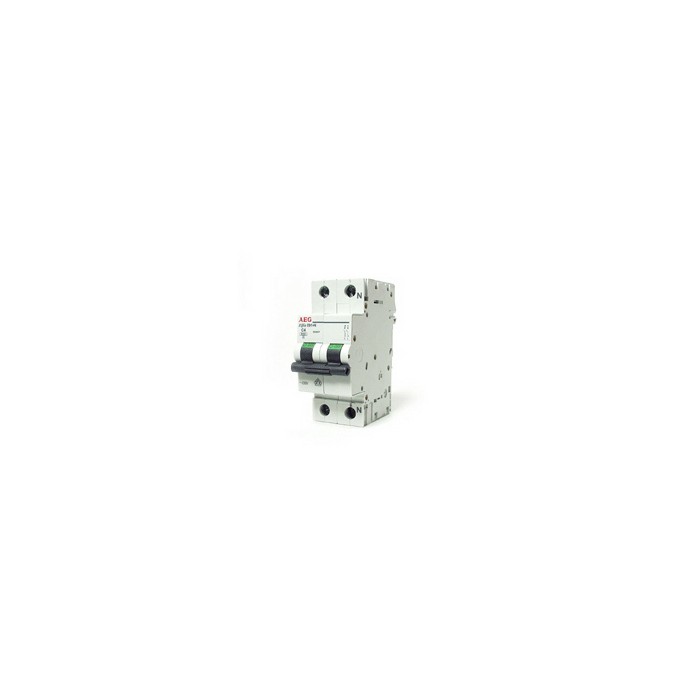
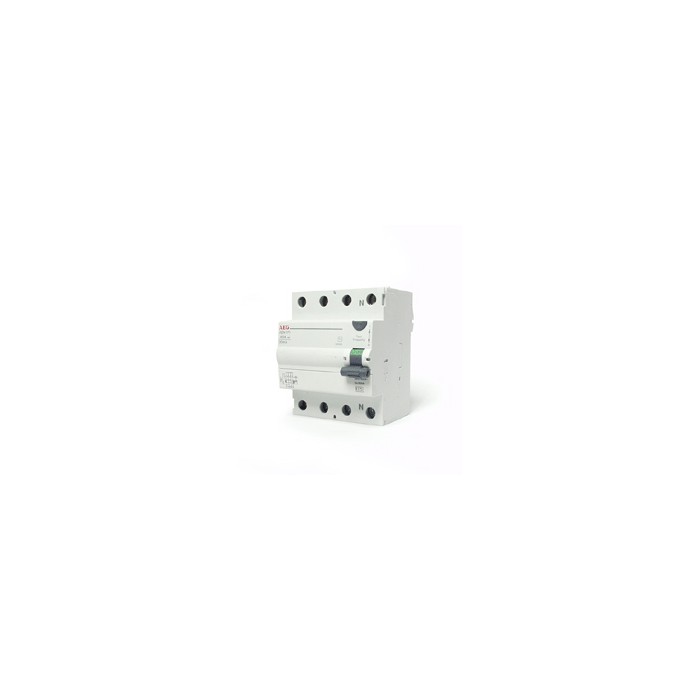
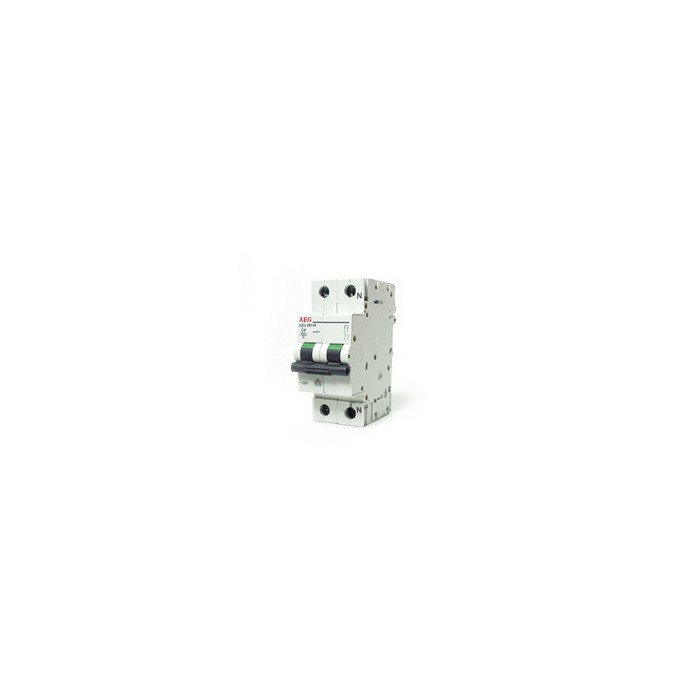
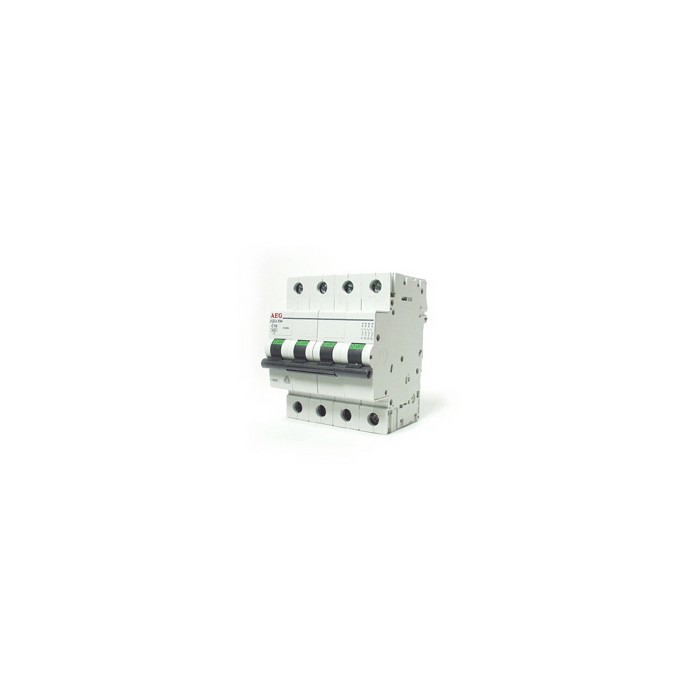
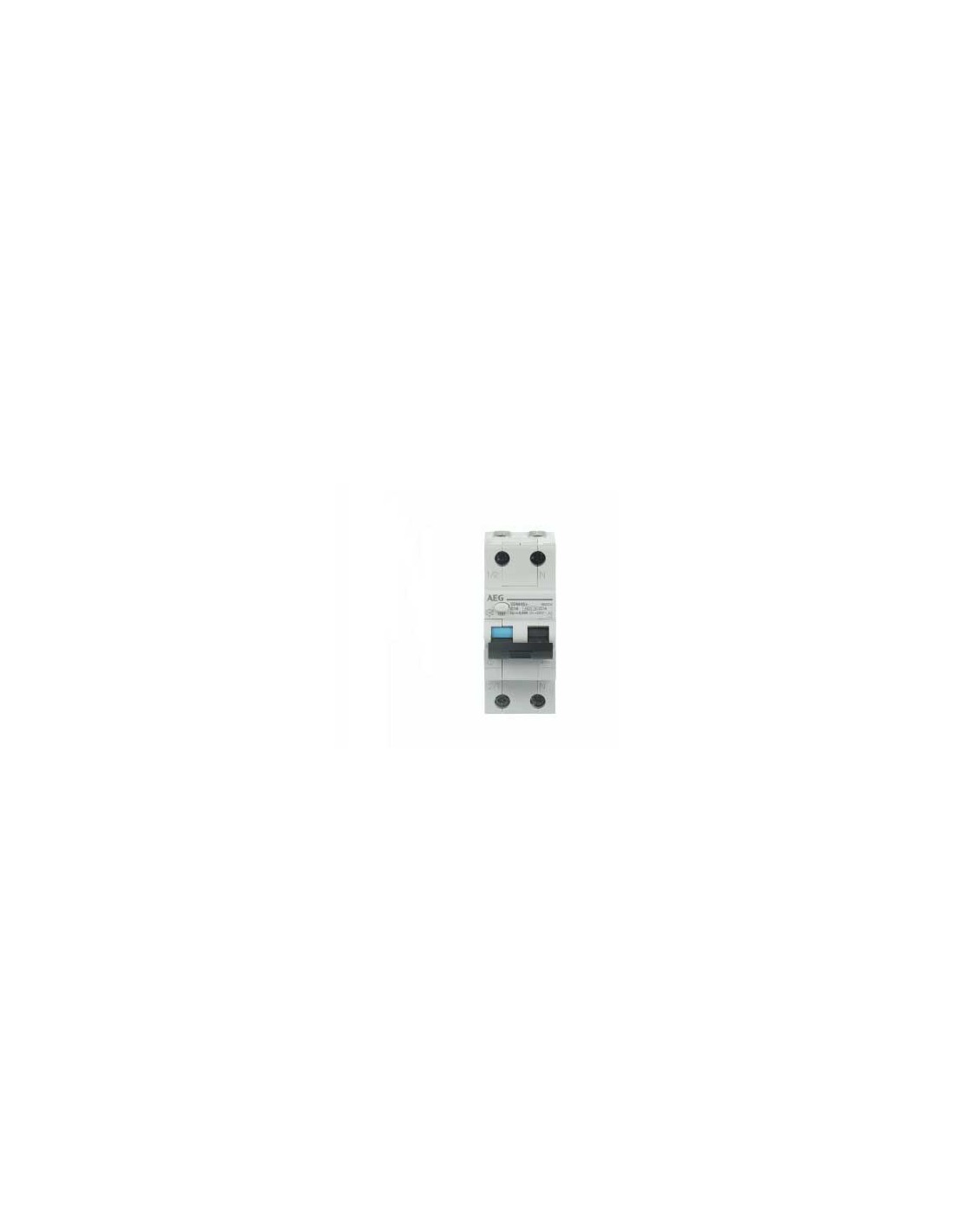
The RCD (or "circuit breaker") protects people from electric shock. It measures the difference between the current entering and leaving the circuit. If there is a current leakage, for example, because a person touches an exposed wire, the RCD detects this leakage and immediately cuts off the power supply.
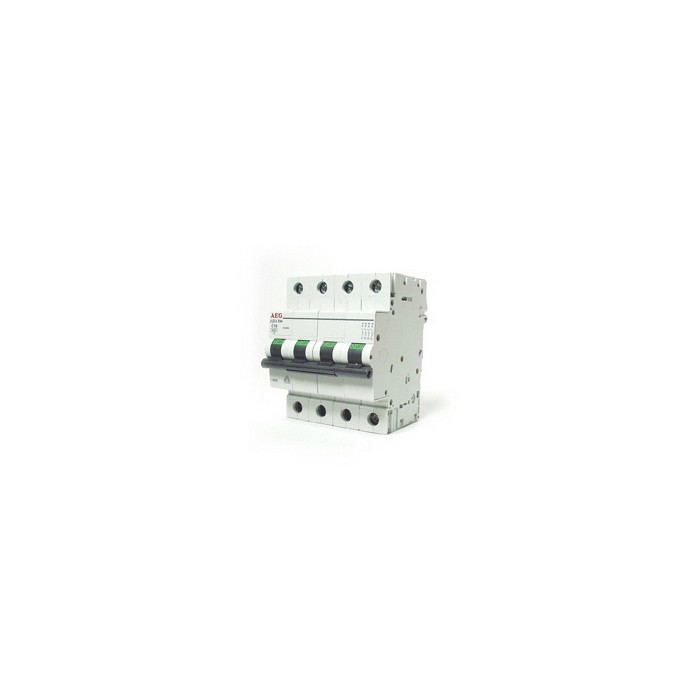
The circuit breaker's magnetic-thermal part performs two protective functions: Thermal (overload) protection: If the electrical current exceeds the nominal value of 16 amperes for a prolonged period (for example, due to too many appliances being turned on simultaneously), a bimetallic strip inside heats up and deforms, tripping the circuit breaker. This prevents overheating of the wiring and the risk of fire. Magnetic (short circuit) protection: In the event of a short circuit, a very high, instantaneous current surge occurs. The internal magnetic coil detects this surge and trips the circuit breaker within milliseconds, protecting the circuit.
Technical Features
- Rated current Ie 16 A
- Intervention threshold 30 mA
- Number of Poles 1 N
- Number of Modules 2
- Intervention curve C (5 - 10 In)
- Class A
- Rated short-circuit power 4.5 kA
- Breaking capacity according to EN60947-2 at 230Vac 6 kA
- Rated voltage Ue AC 230 V
-